
Living and working in Thatcham, 10 years from now
2,500 new homes are coming to Thatcham. But the housing development is not happening in isolation, it’s part of West Berkshire Council’s Local Plan, adopted in June 2025. What can we learn about the development and the future of our community by looking in more depth at the wider strategy? What can we expect Thatcham to look like in a decade’s time? What will it be like to live here?
The answers are far from promising, as with the housing development, the plan for jobs and commercial growth in the area seems to favour hitting floor-space targets and filling quotas over making any effort to provide the jobs and services that underpin a decent quality of life for the future residents of Thatcham.
In ten years’ time, if we follow the trajectory laid out in the local plan, Thatcham will be little more than a sprawling housing estate in the north and a sprawl of distribution hubs and warehouses in the east. The place where West Berkshire’s numeric targets for housing and employment floorspace squeezed any remaining life out of a community.
That might sound dramatic, but honestly if you read the documents (as I have) it’s the reality of where we’re headed unless something changes.
There’s nothing to be gained by standing by and watching a bad thing happen, though, and there are things we can do to ensure a brighter future for the town. Read on to find out more.
A town is more than just a bunch of houses
There’s more to a town than just a load of houses. A prosperous and happy town needs jobs for the people who live there as well as services like supermarkets, shops, pubs, restaurants, hairdressers, gyms and so on.
Towns also need schools, doctors, transport links and really basic stuff like electricity, water and sewage infrastructure. These topics are too big to cover in this blog, but I do call them out here and will hopefully dig deeper into each in future.
In this post I want to focus on understanding what life will be like in Thatcham once the 2500 new homes have been built, and to do that we need to think about where people will work, shop and socialise.
The residential and commercial plans
The problem with trying to look at the housing and commercial side of the development is that the details are spread across different documents and plans, governed by different processes and people. One for the housing development we all know about and another for commercial development - offices, factories, warehouses, hotels, shops and the like.
Planning law is complicated! I wrote more about how it works here. If you want more detail on the specific documents and processes, expand the section below.
National Planning Policy Framework (NPPF)
  └── West Berkshire Local Plan
        ├── Strategic policies (SP1–SP24)
        │     ├── SP1  – spatial strategy
        │     ├── SP14 – NE Thatcham housing allocation
        │     └── SP17 – employment land: district-wide targets & strategy
        └── Non-strategic site allocations (Chapter 8)
              └── ESA1 – Colthrop Industrial Estate, Thatcham
Policy SP14 is the plan for 2500 houses on farmland around the north eastern edge of Thatcham. “SP” stands for “Strategic Policy” by the way. Policy SP17 is the policy which sets out the plans for employment across the whole district, with ESA1 in the Local Plan naming Colthrop Industrial Estate, south of the A4 in Thatcham, as the district’s site for meeting those targets (ESA = Employment Site Allocation). Policy SP1 ties the other two strategic policies together, naming Newbury and Thatcham as the district’s “focus for business development” in the same breath as naming Thatcham for housing growth. These all roll up into the Local Plan which defines what will happen in West Berks between 2023 and 2041 and itself sits under central government’s National Planning Policy Framework.
Phew!
If that weren’t complicated enough, the scope, numbering and intentions behind these documents have changed multiple times over the last few years. If you decide to google on the subject, you might find yourself getting confused by this (I know I did!). Critically…
- The Local Plan’s timeframe was altered from 2022-2039 to 2023-2041
- North East Thatcham was policy SP17, and employment land was policy SP20. This was changed in the final adopted Plan (2023–2041) on 10th June 2025. NE Thatcham became SP14, employment land became SP17.
- The size and scope of both SP14 and SP17 have been increased multiple times, often against the wishes of local councillors.
The split between commercial and residential wasn’t always so clean cut. The original draft of SP14 required “approximately 1,100 sqm” of local retail/business floorspace as part of the 2,500-home site. The Planning Inspector explicitly struck out that figure as “not justified,” leaving the final, adopted policy with no floorspace minimum at all. All that remains in the plan is “local centres providing local retail facilities and small-scale business-use” which is so vague it basically says nothing at all. Note also that one of the three promised “local centres” is Bradley Moore Square, which already exists and isn’t exactly what I imagine as the focal point of a whole community!


The Sad Truth Behind the Plan
What becomes immediately apparent when reading the disjointed plans for Thatcham can be summed up in one word: warehouses.
West Berkshire Council’s Local Plan for the next two decades, to my eyes, seems to revolve around using Thatcham as a dumping ground: for a vast housing development the town’s own infrastructure isn’t ready for, and for yet more warehousing and distribution depots that bring little employment and nothing at all for residents in the way of shops, cafés or community spaces. You don’t pop out for a coffee at a distribution centre.
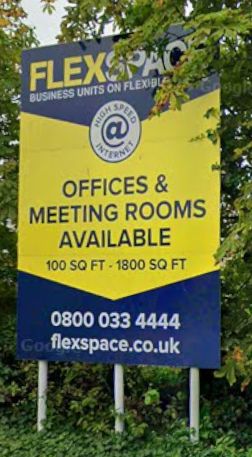
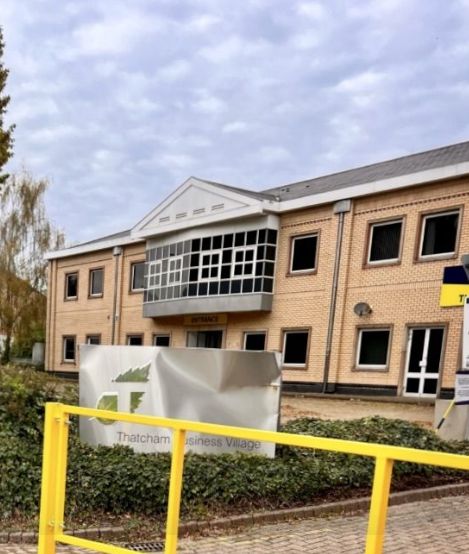
How do I know it’s warehouses? ESA1, the site allocated under SP17, is designated B2/B8 - general industrial and storage & distribution, or in plain English: warehouses. By the time the Local Plan was even adopted, most of it was already spoken for: a footnote to the ESA1 policy itself confirms outline permission for 19,536 sqm of B2/B8 space (application 21/02130/OUTMAJ), plus a Thames Valley Police “Logistics Hub” (application 23/02965/FULMAJ) which is currently under construction. And it’s not just the new allocation - nearby on the same estate, Flexspace No.3 LLP secured planning consent to demolish two 1980s office buildings off Colthrop Way and replace them with two warehouses. Flexspace has since sold the site to Kingsbridge, an industrial investment fund, which now plans to build out both warehouses (~70,000 sq ft between them), targeting completion in 2027.
Councillor Jeremy Cottam, at a Thatcham Town Council meeting reported in Newbury Today (14 May 2025), said of the housing development: “They seem to take no account of what effect dumping 2,500 houses on Thatcham without suitable infrastructure will have”.
Councillor Owen Jeffery grudgingly approved the police logistics hub with the following comment: “I’m urging approval of an application of which I do not approve. About 18 months ago, a previous eastern area planning committee agreed - after a tied vote - to permit an appalling travesty of a planning application to be approved. We had cross political party opposition, we had cross town and parish council opposition, all opposed to an utterly inappropriate 24/7 HGV delivery and exchange depot but it was approved. As a result, an application that I would otherwise be utterly opposing, I support”.
The Police Logistics Hub is under construction now, along the A4. It’s an ugly grey cube in a car park, dumped on a field next door to an office that’s been empty for over a decade - but the development represents pretty much the best we can hope for at Colthrop. It’s basically an office for police support staff (not a police station) and it’s conceivable that some of the staff may be Thatcham residents or might decide to move here. Though it won’t do much for the area in terms of culture or convenience, it will bring many times more jobs and I would imagine far fewer HGVs than yet another distribution centre!
Not just fewer jobs, but worse jobs
Warehouses and distribution centres take up a huge amount of space, but give very little benefit to the town.
Warehouses are job-light by design. The industry-standard reference here is the Homes and Communities Agency’s own Employment Density Guide, which every employment land review in the country uses, including West Berkshire’s own. It reckons an office supports around one job per 8–13 sqm, depending on the sector. General industrial space (B2) needs 36 sqm per job. Storage and distribution (B8) - what’s actually being built at Colthrop - needs 70 to 95 sqm per job, depending on the type of shed. Swap an office for a warehouse of the same size, in other words, and you’ve cut the potential jobs by a factor of five to seven. And there’s no counterweight anywhere in the policy: neither SP17 nor ESA1 mentions a minimum job density, a sector mix, or a wage requirement. As far as the Local Plan is concerned, floorspace is floorspace, whether it employs 90 people or 15.
As an example, the new police hub is 7,800 sqm supporting 362–500 jobs. Using the figures above, a warehouse of the same size would support somewhere between 82 and 111.
It’s not just fewer jobs, either - it’s worse jobs. The Government’s own occupational standards body puts the median salary for a warehouse operative at £24,889 a year. The UK-wide median full-time salary, across all jobs, was £39,863 in 2025, so a typical warehouse job pays little more than 60% of a typical UK job. The ONS’s own data on low pay confirms this isn’t a one-off: “elementary occupations” (the category most warehouse roles fall into) have the highest share of low-paid jobs of any occupation group in the country. And it’s not just pay: warehouse work is disproportionately insecure. When the Government announced its own crackdown on exploitative zero-hours contracts, the case study it chose to illustrate the problem was a warehouse operative.
No offence if you work in a warehouse, by the way. This isn’t meant to be a dig at anyone. But opportunities for the next generation of Thatcham kids really need to extend beyond a zero hours contract at the local depot!
Not well connected, just cheap
You might assume the logic for locating “large scale storage and distribution” in Thatcham is transport - proximity to the M4, decent roads, that sort of thing. It isn’t.
The Council’s own 2022 Employment Land Review, quoted directly in a live appeal decision, says the district is “a credible location of large scale storage and distribution helped by comparatively lower rents… making it an attractive location for those occupiers being ‘priced out’ of more expensive locations, closer to London and Reading.” Cheap, not central. SP17’s own supporting text even concedes that the biggest B8 sheds want to be “at the motorway junctions” - and Colthrop isn’t at one. The nearest are M4 J13, via the A34 and Newbury’s busy roads, or M4 J12, via the A4 through Woolhampton, a single-carriageway through a small village with no room to widen.
The Thatcham we’ll get
Imagine it’s 2036, ten years from today. The last house on the new estate was completed a couple of years ago and two new distribution depots have opened at Colthrop.
The new estates are very quiet, the houses are nice enough but there’s not much to do and residents tend to drive out of town for shopping and entertainment. Thatcham town centre is over a mile from most of the development, too far to walk comfortably, and since residents have to get in their cars most head to Reading, Basingstoke and Newbury. Local businesses in the town haven’t seen much of an uptick in trade this last ten years.
The local centres promised in the plan give residents a place to pick up a pint of milk in a hurry (the Co-Op on Bradley Moore Square is still there) but most head to Tesco or Sainsbury’s in Newbury for their “big shop”. There are a couple more takeaways, a hairdresser, pharmacy and the new doctor’s surgery. Someone tried to set up a coffee shop, but it didn’t last long. There just wasn’t enough passing trade.
Traffic on Floral Way and the A4 never seems to die down. A constant flow of HGVs pass through the town throughout the day and rush hour traffic in the mornings is a nightmare. Around six thousand people live in the new housing development and 1,500 of them commute out of town for work every day. Very few use public transport or share a car.
The station is over half an hour’s walk for most residents, and the car park there is a nightmare - parking is on the wrong side of the crossing and you’re likely to be sitting in traffic most of the way there. If you aren’t over the crossing in time, you sit in your car and watch your train leave without you. It’s just not a great way to commute. Buses struggle through heavy traffic, stuck in the same jams as morning commuters, and rumour has it the routes aren’t profitable and will likely be axed when developer funding runs out in a couple of years.
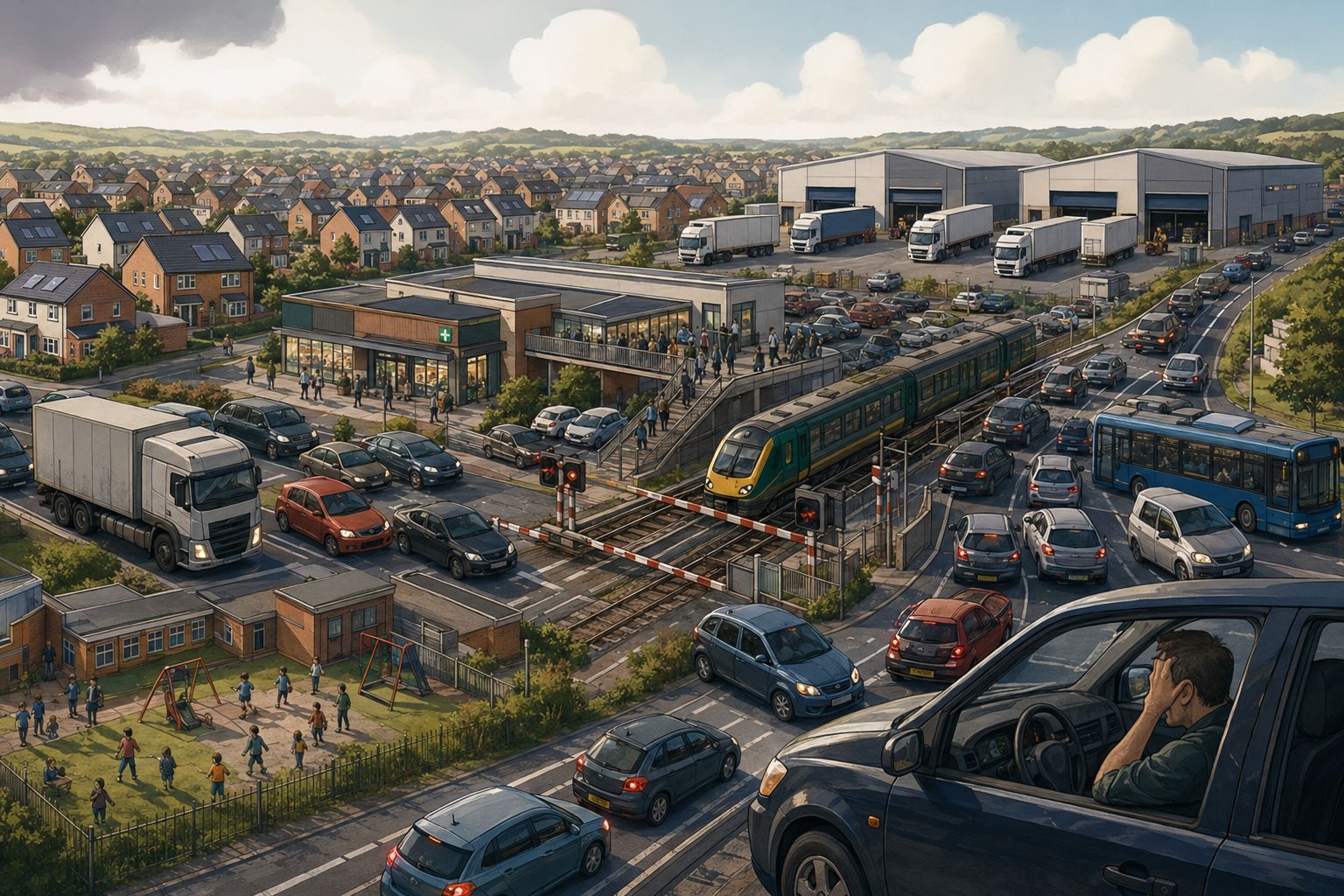
The two new distribution centres added 26,000 sqm of floor space but only about 300 jobs. The reality is that most people who work there arrive by train from Reading every day. The low wages and unpredictable working hours don’t suit the residents of the 2,500 mostly family homes.
The secondary school has not been completed yet, but two new primaries have opened. One sits on the southern edge of the site. The playground is filled with the constant drone of lorries on the A4, all day every day, and school drop-off adds to the congestion on the roads.
Of the nearly 32,000 people who now live in Thatcham, only a few hundred have jobs in the town. Mostly retail workers, teachers and the like. There are a fair few tradesmen based in the town (electricians, plumbers, plasterers etc) who can live here and drive out to work across Berkshire and North Hants - their best work is in the villages around the area, where house prices remain sky-high and people tend to be very well off.
Kennet School continues its solid track record of sending talented kids away to prestigious universities. Few ever move back at the end of their studies. Why come back home when all the good jobs are in the big cities?
Thatcham doesn’t feel like a town, it feels like a sprawl of disconnected estates and industrial units. It’s become the butt of local jokes - a pantomime punchline - shorthand for a place no one really wants to visit where nothing really happens. It’s the place you work because you have to and leave as soon as you can afford to.
This is where we’re headed. This is the natural conclusion of the local plan as it stands today. I hate it! If you live here today, I imagine you hate it too.
The Thatcham we deserve, and how to get it
Imagine it’s 2036, ten years from today. The last house on the new estate was completed a couple of years ago and a new retail park, including a large supermarket have opened at Colthrop.
A revised planning policy, requiring a minimum number of jobs per square metre of new development, discouraged further warehouse schemes, while cheap land and low rates attracted a handful of businesses to move to the town, including a specialist electronics business, a medical device manufacturer and a small cyber security business - all of whom needed a mixture of office and industrial space.
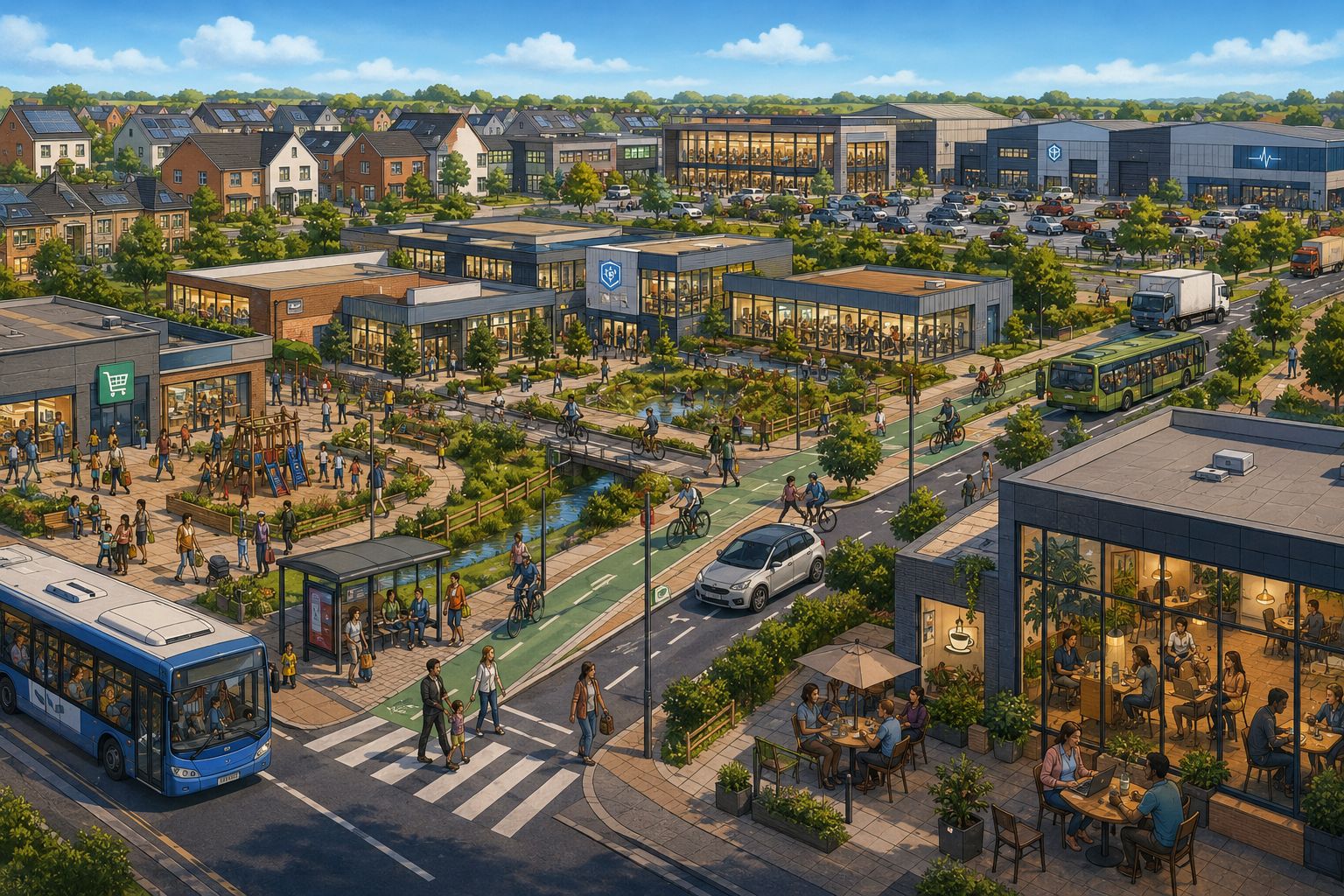
All in all, 26,000 sqm of new development at Colthrop has brought almost a thousand jobs to the area - ranging from retail to highly skilled roles. Established businesses already in the area also benefitted from shopping, transport and new housing options - thus attracting new talent and cementing their position in the town.
The range of skill and pay levels attracted a large number of Thatcham residents, and many more took advantage of low housing costs on the new development, attracted by new schools, shopping options and amenities, all within a few minute’s walk.
2,500 houses is still huge growth for the town, and traffic has got worse over the last 10 years, but the proximity of jobs and shopping options means buses are well used, cycle and footpaths busy. HGV traffic has remained unchanged, as existing depots carry on as normal. People from surrounding villages now head to Colthrop for shopping, as it’s more convenient than many of the stores in Newbury.
The local centres remain modest, but each has a small supermarket, community spaces and such. One has a reasonably sized gym and there’s even a co-working space, where air conditioning and complimentary coffee attracts quite a few home-workers, especially in the summer!
…I could go on, but you get the idea I hope. Perhaps this is an idealised and optimistic vision for Thatcham after the developers have finished their work and moved on to the next town. It’s certainly easy to say “it’ll never happen” - but one way to guarantee it never happens is to accept the much more miserable future I wrote about before! I’d rather aim for somewhere good and get half way there than just accept things as they are.
How to get it
The difference between these two possible futures for Thatcham is actually pretty small. Tweaks and adjustments to policies and plans today can change things massively tomorrow.
Write to your local councillor and/or MP (contact details here), highlight your concerns and perhaps suggest some of these changes:
- Guaranteed supermarket/grocery in all local centres, along with mandatory minimums for commercial and community spaces.
- A genuine business/retail park element with A4 access at Colthrop, alongside (not instead of) industrial floorspace. Policies and business rates to attract the right kinds of employer.
- A phasing condition tying housing completions to commercial and employment delivery — for example, capping the number of new homes that can be occupied before an agreed set of local centre facilities (or a defined share of the employment floorspace) is open and operating. This is the concrete fix for the SP14/SP17 disjointedness described throughout this blog: without it, there’s nothing stopping thousands of homes being occupied years before any of the jobs or services promised alongside them exist.
- Large supermarket and/or retail at Colthrop bringing jobs and convenience to existing and new Thatcham residents.
- A minimum jobs-per-square-metre requirement for new employment floorspace - not just a total sqm target. Right now neither SP17 nor ESA1 says anything about how many jobs a site actually needs to deliver, which is exactly why a warehouse is always the path of least resistance over anything else.
- Reserved space for a gym, a co-working/flexible workspace (or whatever you’d prefer) in at least one local centre, not left to the market to provide if it happens to fancy it. Given how many of Thatcham’s new residents will likely work from home at least part of the week, this is the kind of everyday infrastructure that actually gets used.
- A formal commitment to revisit the employment land position at the Local Plan’s five-year review - including whether the office space forecast behind SP17, built on a single economic model from 2022 and never rerun since, still holds up.
…and anything else you can think of! What matters is letting them know we’ve seen what’s planned in the town and we don’t like it - that we deserve better.
Thanks for reading, if you got this far. Don’t hesitate to get in touch and please do share this blog on socials if you can!